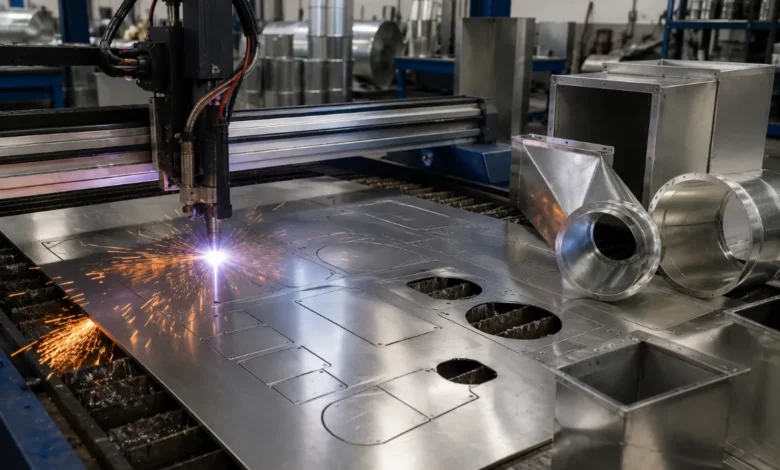
From protective enclosures and brackets to shop fittings, panels and machine components, custom metalwork is used in far more places than many people realise. The best results rarely come from choosing a material alone. They depend on clear planning, suitable fabrication methods and a design that can be manufactured efficiently.
Working with a specialist in Sheet metal fabrication can help turn an idea, drawing or technical requirement into a practical finished component. Understanding the key decisions involved makes it easier to communicate your needs, control costs and avoid changes later in the process.
Start With the Function of the Part
Before deciding on dimensions or finishes, define what the component needs to do. A decorative display panel, for example, will have different requirements from a weatherproof electrical enclosure or a structural bracket.
Consider the environment in which the part will be used. Will it be exposed to moisture, heat, chemicals, regular impact or heavy loads? Will it be installed indoors, outdoors or in a food-production setting? These details influence the choice of material, thickness and protective finish.
It is also helpful to identify any non-negotiable requirements early, such as industry standards, mounting points, weight limits, access panels or precise tolerances. The clearer the brief, the easier it is for a fabricator to recommend an appropriate solution.
Choose the Right Material
Different metals offer different balances of strength, weight, appearance and corrosion resistance. Selecting the right option is central to achieving a reliable, cost-effective result.
Mild steel
Mild steel is widely used because it is strong, versatile and generally economical. It is suitable for many fabricated parts, frames and brackets, particularly where a painted, powder-coated or galvanised finish will provide added protection.
It can be a practical choice for internal industrial applications, but untreated mild steel may corrode when exposed to damp conditions. This makes the finishing stage especially important for parts intended for outdoor use.
Stainless steel
Stainless steel is valued for its corrosion resistance, hygienic properties and clean appearance. It is often chosen for kitchens, catering environments, medical settings and outdoor applications, although it may cost more than mild steel.
Different grades of stainless steel are available, so it is worth discussing the operating environment with the fabricator. A component used near salt water or chemicals may need a different grade from one fitted inside a commercial kitchen.
Aluminium
Aluminium is lightweight and naturally resistant to corrosion. It can be a useful choice where reducing weight matters, such as transport components, cases and certain external fittings.
Its strength and fabrication requirements differ from steel, so the design should reflect this. Aluminium may also be finished or powder coated where a particular colour, texture or additional surface protection is required.
Make the Design Easy to Manufacture
A part can look straightforward on screen but still be difficult or expensive to make. Early conversations with a fabricator can identify ways to simplify the design without compromising performance.
Provide clear drawings and specifications
A detailed drawing should show dimensions, hole locations, bends, tolerances, material type, thickness and finishing requirements. If you do not have a technical drawing, photographs, sketches or an existing sample may still help communicate the brief.
Be clear about which measurements are critical. Not every dimension requires the same degree of precision, and specifying overly tight tolerances where they are not needed can increase production time and cost.
It can also help to explain how the part connects to other components. Details such as fixing points, hinges, cut-outs and cable routes are easier to accommodate before manufacturing begins than after the part has been formed.
Consider bends, holes and joining methods
Bending metal changes the way material behaves, so bend radii, flange lengths and the position of holes need careful planning. Holes placed too close to a bend may distort during forming, while very small features can be difficult to produce consistently.
Think about how separate pieces will be joined too. Welding, riveting, bolting and folding each have advantages depending on the component’s purpose, appearance and service conditions. For example, bolted assemblies can make future maintenance easier, while welding may create a stronger permanent connection.
Select an Appropriate Finish
A finish can improve appearance, protect the metal and make cleaning easier. The right choice depends on where the finished part will be used.
Powder coating provides a durable coloured surface and is commonly used for architectural, industrial and commercial products. Galvanising can offer strong corrosion protection for steel used outdoors. Brushed, polished or passivated stainless steel may be chosen where hygiene and presentation are particularly important.
Ask whether the finish affects dimensions, fit or assembly. Coating thickness can matter when parts need to slot together precisely. You should also establish whether components need to be protected during transport to prevent scratches, marks or surface contamination before installation.
Plan for Quantity and Lead Time
A one-off prototype and a production run of hundreds of identical parts require different planning. For repeat orders, it may be worthwhile to review the design for efficient cutting, forming and assembly. Small adjustments can reduce material waste and speed up manufacturing across a larger batch.
Share your expected quantity, required delivery date and whether you anticipate future orders. This helps the fabricator recommend the most suitable production approach and set realistic lead times.
If the project has a fixed installation date, build in time for design approval, material sourcing, fabrication, finishing and delivery. Allowing room for a prototype or first-off sample can prevent expensive delays later.
Check Quality Before Final Delivery
Inspection should be part of the process, especially for components with critical dimensions or safety requirements. Agree in advance how quality will be checked, whether that involves measuring key features, checking weld appearance, testing assembly or confirming the finish.
For complex work, requesting a prototype or first-off sample can be a sensible step. It allows you to assess fit, function and appearance before full production begins. This is particularly valuable where a component must work alongside existing machinery, equipment or building features.
Conclusion
Successful custom metalwork begins with a clear brief and continues through careful choices about material, design, finish and quality checks. By defining how the part will be used and discussing practical details early, you can create a component that is durable, functional and suited to its intended environment.
Apart from that, if you want to know more about Understanding the Underpaid Employee’s Request: Legal, Ethical, and Practical Steps for HR and Managers then visit our industry category.
Frequently Asked Questions
Sheet metal fabrication is the process of cutting, bending, forming, and joining metal sheets to create custom components or products.
Stainless steel and aluminium are naturally corrosion-resistant. Mild steel can also be suitable when protected with an appropriate finish, such as galvanising or powder coating.
A technical drawing is ideal because it clarifies dimensions and tolerances. However, a sketch, photograph or sample can be a useful starting point for an initial discussion.
In many cases, yes. A prototype can help confirm the design, fit, and finish before committing to a larger production run.