Garage Keepers Insurance: What U.S. Auto Businesses Need to Know Before a Claim

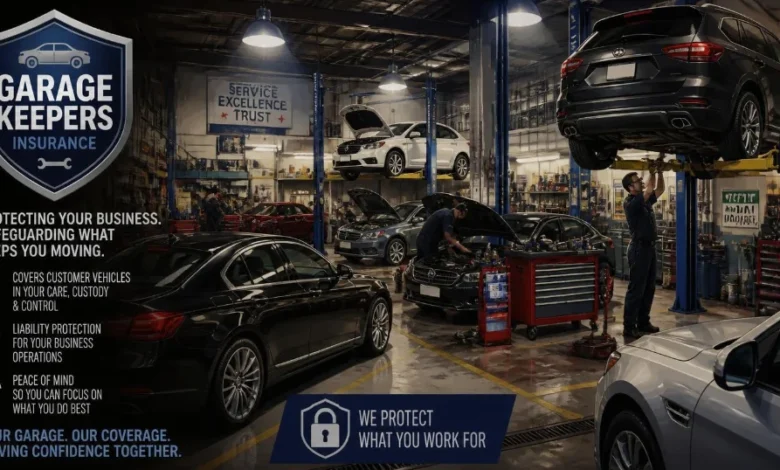
A customer leaves a vehicle with your business and expects it to come back safely. Garage keepers insurance can protect customer vehicles while they remain in your care, custody, or control. It can respond to covered losses involving theft, fire, vandalism, collision, and other specified risks.
For repair shops, dealerships, detailers, towing companies, parking operations, and similar businesses, that protection fills an important insurance gap. Regular business liability coverage does not automatically protect every customer vehicle entrusted to you. Your exact protection still depends on the policy form, exclusions, limits, deductibles, and state requirements.
Direct answer: Garage keepers coverage protects customer vehicles while an eligible business possesses them for service, repair, storage, parking, or related work. Depending on the policy form, it may cover losses involving collision, theft, fire, vandalism, or weather. Businesses should compare legal liability, direct primary, and direct excess options before buying.
| Key question | Quick answer |
|---|---|
| What does it protect? | Customer vehicles in your care, custody, or control |
| Who commonly needs it? | Repair shops, dealers, detailers, tow operators, parking businesses, and service stations |
| Is it the same as garage liability? | No. The two cover different risks |
| Common covered losses | Theft, fire, vandalism, collision, and certain weather losses |
| Common exclusions | Personal property, faulty workmanship, intentional damage, and other policy-specific exclusions |
| How is coverage written? | Legal liability, direct primary, or direct excess forms may be available |
| What affects price? | Location, vehicle values, vehicle count, limits, deductibles, operations, and claims history |
Key Takeaways
- Customer vehicles may require separate protection from your general business liability policy.
- The coverage form matters almost as much as the coverage limit.
- Legal liability coverage normally depends on your business being legally responsible.
- Direct primary coverage can provide broader protection regardless of fault, subject to policy terms.
- Customer belongings and defective workmanship are commonly outside standard coverage.
- Limits should reflect the maximum combined value of customer vehicles you may hold.
- Pricing varies significantly, so marketplace averages should not replace actual quotes.
What Is Garage Keepers Insurance?

This insurance is designed for businesses that temporarily possess vehicles belonging to customers. A qualifying vehicle might be awaiting repairs, sitting overnight, undergoing detailing, or being moved around a service facility. Progressive describes the coverage as protection for customer vehicles damaged by events such as fire, theft, vandalism, or collision while in the business’s possession.
Nationwide also lists garage keepers coverage for physical damage involving a customer’s auto during garage operations. That distinction matters because a customer’s car represents property your business does not own. Ordinary property insurance mainly protects assets belonging to the insured business itself.
Owners exploring the automotive service industry should understand how Garage Keepers Insurance fits into their business protection plan. They can also review BusinessVert’s guide to top auto repair franchises, which covers common service models, investment considerations, and operating requirements. Evaluating Garage Keepers Insurance alongside startup and operating expenses can help owners make informed business decisions.
Who Needs This Coverage?
Any company regularly accepting custody of customer vehicles should examine this risk. Common examples include auto repair shops, body shops, dealerships, detailing companies, parking facilities, towing businesses, and service stations. Insureon also lists oil-change businesses, windshield installers, emissions shops, mobile mechanics, and valet operators among relevant operations.
Consider a repair shop holding eight customer vehicles overnight. A single fire could damage several vehicles before employees arrive the next morning. Even when the shop owner did not cause the original fire, the financial and customer-service consequences could be substantial.
A growing automotive business also needs to budget beyond its insurance premiums. BusinessVert’s resources on U.S. small-business grants and funding programs can help owners understand legitimate financing opportunities. Funding should never replace appropriate risk protection, but both belong in sound financial planning.
What Does Garage Keepers Insurance Cover?
Exact protection depends on the policy, so owners should read their forms carefully. Commonly insured losses can include theft, vandalism, fire, collision, and certain weather-related damage. Coverage may also apply while employees move or test-drive customer vehicles during covered garage operations.
Imagine a technician backing a customer’s SUV into a shop pillar. A suitable policy could respond to the resulting vehicle damage, subject to its deductible and coverage terms. A theft from a secured lot could also qualify when the relevant causes and conditions are covered.
Coverage should not be assumed from a business name or certificate alone. Two policies carrying similar labels can have different deductibles, exclusions, valuation provisions, and settlement rules. A licensed insurance professional can explain how each carrier’s wording applies to your operation.
Legal Liability vs. Direct Primary vs. Direct Excess
The coverage basis determines when the insurer may respond. Legal liability coverage generally applies when the business becomes legally responsible for damage to a customer’s vehicle. That usually makes fault an important part of the claim analysis.
Direct primary coverage can provide broader protection because covered vehicle damage may be handled without first establishing the customer’s own insurer as primary. This approach can simplify some customer claims and reduce disputes over who should file first. Broader protection can also affect the premium charged by the carrier.
Direct excess coverage generally sits above other collectible insurance in situations permitted by the policy. The customer’s own auto policy may respond first, with the business policy addressing an eligible remaining amount. Owners should compare these forms carefully rather than choosing only by price.
| Coverage basis | When it generally responds | Main consideration |
|---|---|---|
| Legal liability | When the business is legally liable | Usually narrower and fault-focused |
| Direct primary | Covered losses regardless of fault, subject to terms | Broader customer protection |
| Direct excess | After other collectible insurance, where applicable | Coordination with customer coverage |
Garage Keepers vs. Garage Liability Insurance
These names sound similar, but they address different exposures. Garage liability insurance focuses on liability arising from garage business operations. Customer vehicle physical damage requires separate consideration under the garage keepers portion of the insurance program.
For example, a customer might slip on an oily shop floor and suffer an injury. That claim involves a different risk than damage to the customer’s sedan sitting in a service bay. An auto business may therefore need both coverages rather than choosing between them.
This distinction matters when reviewing a certificate or renewal proposal. Seeing the words “garage liability” does not prove customer vehicles have appropriate physical-damage protection. Ask the agent to identify the relevant form, limit, deductible, and coverage basis.
What Usually Is Not Covered?
Customer belongings left inside vehicles are commonly excluded from standard protection. Phones, merchandise, tools, loose electronics, and other personal property may require separate coverage or an endorsement. Insureon specifically identifies property in trunks and glove compartments among common exclusions.
Faulty workmanship can also create confusion. The cost of correcting defective work or replacing a poorly installed part may fall outside the vehicle-damage coverage itself. Other exclusions can involve intentional acts, employee dishonesty, wear and tear, or undisclosed business activities.
Owners should never treat these examples as a complete exclusion list. Carrier forms differ, and endorsements can change what a policy covers. Review the actual contract before relying on coverage for a particular exposure.
How Much Does Garage Keepers Insurance Cost?
There is no universal U.S. premium because insurers evaluate each business differently. Insureon currently reports an average of $38 monthly, or $458 annually, among auto-service customers buying this coverage through its marketplace. That figure describes its customer data and should not be treated as a guaranteed quote.
Premiums can change with location, business type, vehicle values, customer vehicle volume, deductibles, and limits. Claims history and the specific coverage form can also influence pricing. A shop servicing expensive vehicles can present a different exposure from a small neighborhood detailing operation.
Budgeting for insurance should be part of broader operating-cost planning. BusinessVert also publishes current U.S. small-business news and policy updates for owners monitoring financing and economic developments. Those broader conditions can affect planning even when individual insurance pricing remains carrier-specific.
How Much Coverage Should You Buy?
Start by estimating the largest total value of customer vehicles your business could hold simultaneously. A shop with ten vehicles worth $35,000 each has a different exposure from one holding two economy cars. Overnight storage and seasonal peaks should also be included in that calculation.
Next, consider whether higher-value vehicles appear occasionally. One luxury vehicle can materially increase the property value sitting in your custody. Your limits should reflect realistic peak exposure rather than the average day alone.
Finally, review contractual requirements from landlords, franchisors, lenders, dealer networks, or business partners. Some agreements can specify insurance limits or coverage conditions. An insurance agent can then compare those requirements against available carrier forms.
How to Reduce Customer-Vehicle Risk
Insurance works better when supported by practical loss controls. Strong controls can reduce claims and provide better documentation after an incident. They can also help underwriters understand how carefully your business manages customer property.
Useful practices include:
- Photograph vehicles during customer check-in.
- Record existing scratches, dents, and windshield damage.
- Control employee access to customer keys.
- Keep outdoor lots illuminated and monitored.
- Use alarms, gates, cameras, and secure key storage.
- Limit test drives to authorized employees.
- Document who moved each vehicle.
- Keep repair bays and driving lanes clear.
- Report incidents to the insurer promptly.
Documentation can prevent disagreements about when damage occurred. A consistent intake process also helps employees follow the same procedure. Those habits protect both customer relationships and your claim records.
How to Shop for the Right Policy
Begin by giving the agent accurate operating details. Describe your services, maximum vehicle count, typical vehicle values, overnight storage, security measures, and employee driving practices. Incomplete information can produce a policy that does not match the real exposure.
Next, compare more than the premium. Review the coverage basis, policy limit, deductible, covered causes of loss, exclusions, and any special conditions. Ask how customer vehicles are handled during test drives, towing, temporary storage, and off-site movements.
Finally, request clear explanations for any term you do not understand. Insurance language can have significant consequences after a claim. Keep copies of the policy, endorsements, certificates, and renewal documents where management can reach them.
Protect the Vehicles Customers Trust You With
A single damaged customer vehicle can create repair costs, complaints, and reputational problems. Several damaged vehicles can create a much larger financial event. The right insurance arrangement gives an automotive business a structured way to handle eligible losses.
Review your maximum customer-vehicle exposure before requesting quotes. Compare coverage forms instead of comparing premiums alone. Then ask a licensed U.S. commercial insurance professional to confirm how your selected policy applies in your state.
Frequently Asked Questions About Garage Keepers Insurance
Is garage keepers insurance legally required?
No single rule applies to every U.S. business and situation. Requirements can depend on state law, contracts, leases, or specific business arrangements. Even without a direct legal mandate, holding valuable customer vehicles can create a significant uninsured exposure.
Does it cover vehicles owned by my business?
Usually, this coverage focuses on vehicles belonging to customers. Company-owned cars and trucks generally fall under commercial auto or another appropriate policy. You should identify each vehicle category when reviewing your insurance program.
Does it cover a customer’s belongings inside the car?
Standard forms commonly exclude personal belongings left inside customer vehicles. Optional coverage may sometimes be available depending on the insurer. Ask specifically about tools, electronics, merchandise, and other valuable contents.
Is garage liability enough for an auto repair shop?
Garage liability and customer-vehicle coverage protect against different exposures. An operation can have garage liability and still need separate protection for vehicles entrusted by customers. Review both areas before assuming your insurance program is complete.
What information do I need for a quote?
Insurers commonly want your business type, location, customer vehicle count, vehicle values, limits, and deductible choices. They may also consider revenue, security measures, prior coverage, and claims history. Accurate information produces a more useful quote and reduces surprises later.