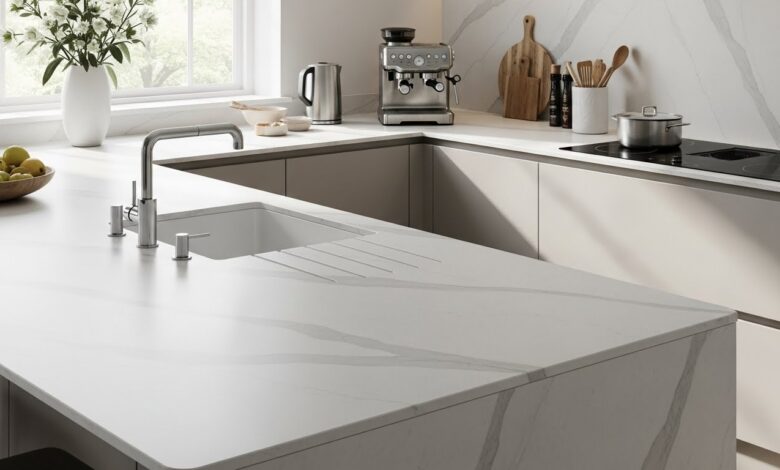
Choosing a new surface is an important part of any interior project. Whether you are updating a kitchen worktop, designing a bathroom, creating a feature wall, or planning an outdoor entertaining area, the material you choose needs to balance appearance, durability, maintenance, and budget.
Quartz, ceramic, marble, and granite all offer distinct advantages. Understanding how they perform in everyday settings can make it much easier to select a surface that looks right for your home and remains practical for years to come.
Start With How the Space Will Be Used
The best surface is not always the most expensive or eye-catching option. It is the one that suits the demands of the room.
For example, a busy family kitchen may need a low-maintenance, stain-resistant worktop, while a feature fireplace or bathroom vanity may allow more freedom to prioritise natural character and visual impact.
Consider:
- How often the surface will be used
- Whether it will come into contact with heat, water, or food
- The likelihood of scratches, spills, and knocks
- The amount of maintenance you are happy to carry out
- Whether you want a uniform or naturally varied appearance
- How the surface will work with cabinets, flooring, and lighting
It is also worth viewing full slabs where possible. Samples are useful, but larger pieces reveal the movement, veining, depth, and overall tone of the material more accurately.
Quartz for Everyday Practicality
Quartz is a popular choice for kitchens, bathrooms, utility rooms, and commercial interiors because it combines a polished appearance with dependable performance.
Engineered quartz surfaces are made using natural quartz combined with resin and pigments. This creates a non-porous material that is generally easy to clean and highly resistant to everyday staining.
Why Quartz Works Well in Kitchens
Kitchen worktops need to cope with regular use, from food preparation and spills to appliances and general household activity. Quartz offers a wide choice of colours and finishes, from subtle neutral tones to bold marble-effect designs.
Its consistent appearance can make it especially suitable for modern kitchens where a clean, coordinated finish is important. However, as with most worktop materials, it is still sensible to use trivets for very hot pans and chopping boards to help protect the surface.
Ceramic for Indoor and Outdoor Versatility
Ceramic slabs are increasingly used for worktops, wall cladding, flooring, bathrooms, and outdoor kitchens. They can offer the appearance of natural stone, concrete, metal, or timber while providing a highly practical, low-maintenance finish.
Ceramic is non-porous and can be resistant to heat, stains, scratches, and frost, making it particularly useful in areas exposed to changing conditions.
A Strong Option for Modern Design
Large-format ceramic slabs can create a seamless, contemporary look with fewer visible joints. They are also available in striking bookmatched designs, where two slabs mirror one another to create a dramatic focal point.
This makes ceramic an appealing choice for statement walls, media units, reception spaces, and outdoor living areas, as well as traditional worktop applications.
Marble for Natural Beauty and Character
Marble has been valued for centuries because no two pieces are exactly alike. Its veining and depth can make it a standout material for bathrooms, fireplaces, feature walls, staircases, and carefully considered kitchen designs.
The natural variation is part of marble’s appeal. It can introduce softness, movement, and a sense of luxury that manufactured surfaces may not replicate in the same way.
However, marble is more porous than quartz or ceramic and can require more attentive care. It is important to clean spills promptly and follow guidance on suitable cleaning products, particularly in kitchens and bathrooms.
For homeowners, fabricators, and showrooms looking for premium slabs across natural stone, quartz, and ceramic ranges, Corestone Limited supplies surfaces suited to a wide variety of residential and commercial projects.
Granite for Strength and Natural Detail
Granite is a hard natural stone known for its durability and distinctive mineral patterning. It can be an excellent choice for kitchen worktops, bathroom surfaces, bars, fireplaces, and outdoor applications.
Its appearance varies considerably from slab to slab, with options ranging from subtle pale tones to deep blacks, greys, browns, and more dramatic colour variations.
Practical Benefits of Granite
Granite can withstand the demands of everyday use well when properly selected and maintained. It also offers a natural look with a level of strength that makes it suitable for busy spaces.
Because it is a natural material, viewing the chosen slab before fabrication is especially valuable. This allows you to see the exact colour, pattern, and movement that will become part of the finished design.
Match the Surface to Your Style
Material performance matters, but the visual result matters too. A surface should complement the wider room rather than compete with it.
For a calm, timeless interior, consider soft veining, warm whites, light greys, or neutral stone tones. For a more dramatic scheme, darker granite, richly veined marble, or bold ceramic designs can create an impressive focal point.
Think about the room’s natural light as well. A sample that looks subtle in a showroom may appear warmer, cooler, lighter, or darker in your home.
Plan Installation Carefully
Even the most beautiful slab depends on good fabrication and installation. Measurements, joins, cut-outs, edge profiles, splashbacks, and support requirements should all be considered before the final order.
Ask your supplier or fabricator about:
- Suitable thicknesses for the application
- Recommended edge details
- Care and cleaning guidance
- Slab matching and veining direction
- Requirements for sinks, hobs, and taps
- Whether the material is appropriate for outdoor use
Careful planning helps prevent avoidable delays and ensures the finished surface performs as intended.
FAQ
Quartz and ceramic are often chosen for their non-porous, low-maintenance properties. The best choice depends on the look you want and the demands of the space.
Yes, but it requires more care than some alternatives. Marble is ideal for homeowners who appreciate natural variation and are comfortable cleaning spills quickly and following suitable maintenance advice.
Many ceramic products are suitable for outdoor applications because they can resist moisture, frost, heat, and UV exposure. Always check the specification for the particular slab and installation.
A sample is a helpful starting point, but viewing a full slab is recommended for materials with natural veining, colour variation, or movement.
Conclusion
The right surface can transform a practical room into a space that feels considered, durable, and personal. By thinking about everyday use, maintenance, style, and installation from the start, you can choose confidently between quartz, ceramic, marble, and granite.
A well-selected surface is not simply a finishing touch—it is a long-term part of how your home looks and works.
For more details about Understanding Water Damage please visit our Business category.