Auto Repair Shop Franchise: A Comprehensive Overview of Services Offered, ‘Near Me’ Locations, Residential Areas, For Sale Listings, Business Plans, and Opportunities in California

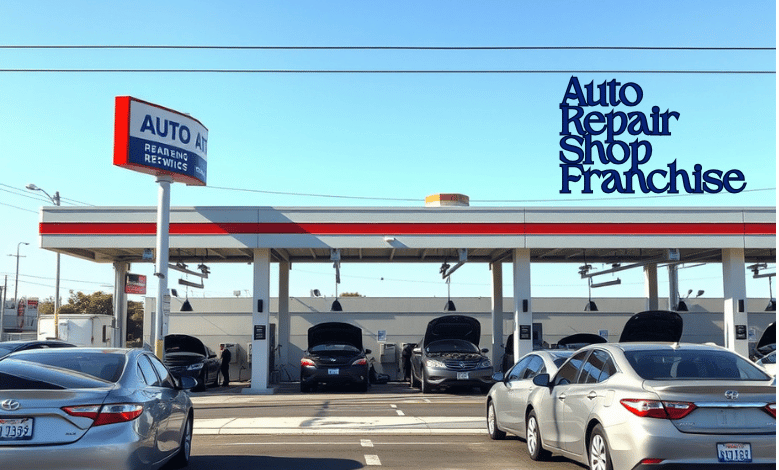
Auto Repair Shop Franchise
An auto repair shop franchise in California offers a powerful combination of steady demand, recurring customers, and long-term business potential. With millions of vehicles on the road every day, the state depends on reliable shops to provide routine maintenance, diagnostics, specialty repairs, and smog services.
This comprehensive guide explores everything you need to know before investing in or opening a franchise, including the types of services typically offered, how to find “near me” locations even in residential-adjacent areas, available businesses and franchises for sale, and how to structure a strong business plan. You’ll also discover key opportunities and challenges unique to the California market, including regulatory requirements, growth trends, and competition.
Whether you’re buying an existing shop, converting an independent garage into a franchise, or planning a new location from the ground up, this guide lays out the essential steps to help you succeed.
Auto Repair Shop Franchise – Key Information Table
| Category | Details |
| Business Type | Auto Repair Shop Franchise |
| Industry | Automotive repair & maintenance services |
| Popular Services in an Auto Repair Shop Franchise | Oil changes, diagnostics, engine repair, transmission, smog checks, brakes, suspension, AC/heating, fleet services |
| Target Customers | Commuters, families, fleet vehicles, rideshare drivers, and residents |
| Location Strategy | High-visibility roads, commercial/industrial zones, or the edge of residential zones (zoning required) |
| “Near Me” Search Advantage | Helps customers find an Auto Repair Shop Franchise easily, increases walk-ins, and repeat business |
| Startup Options | Open a new franchise, convert an independent shop into an Auto Repair Shop Franchise, or buy an existing business for sale |
| Franchise Fees (Example) | Approx. $44,000 initial fee, ~6.5% royalty, required marketing budget |
| Regulatory Requirements in California | BAR license, emissions/smog compliance, hazardous waste disposal rules, zoning, and environmental permits |
| Major Opportunities | Large vehicle population, suburban growth, hybrid/EV repair demand, recurring maintenance revenue |
| Main Challenges | High real estate costs, competition with independent shops & dealerships, strict zoning, and a shortage of skilled technicians |
| Revenue Streams | Repairs, maintenance, diagnostics, fleet contracts, mobile services, and add-on packages |
Services Offered in Auto Repair Shop Franchises
A key appeal of auto repair shop franchises is the breadth of services they can offer, often under a recognized brand with proven systems and marketing support. For example, the franchise opportunity from All Tune highlights that they provide a “total car care” model, which means multiple revenue streams from repairs, diagnostics, maintenance, and more.
Typical services you’ll find in an auto repair shop franchise include:
- Routine maintenance (oil changes, filter replacements, brake & lamp checks)
- Mechanical diagnostics and engine repairs
- Transmission repair and rebuilds (sometimes as a specialty)
- Smog checks and emissions work (particularly relevant in California)
- Suspension/steering work, exhaust systems, heating & AC repairs
- Additional value‐added services such as fleet maintenance, mobile repair, or roadside assistance (some franchises support or partner for these)
- Sometimes, body shop or light collision repair, if the location supports it
Because many drivers cannot skip necessary repairs (they must maintain vehicle safety or meet emissions standards), the business tends to be resilient, which is a strong point for a franchise model.
Finding “Near Me” Locations & Residential Area Considerations
When looking for a franchise or a site to launch one in California, you’ll often search for “auto repair shop near me” and assess whether the site is suitable. Some key points for location and residential‐area adjacency
Franchises prefer high‐visibility locations with a steady traffic flow, main roads, commercial/industrial zones, or the edge of residential zones with zoning that permits automotive service. If you’re in or near a residential neighborhood, you must check local zoning laws and automobile repair use permits. California’s business quick‑start guide for automotive repair states that licenses, local zoning approvals, and environmental permits may apply.
Being “near residential areas” can be advantageous for walk‑in or local customers. Still, residential zoning often limits work hours, the number of vehicles parked, and noise/odor constraints, so you’ll need to evaluate the site accordingly. Franchises usually offer “protected territories” or defined trade areas so you’re not competing with another same‐brand shop too close.
For example, All Tune’s franchise disclosure notes “available attractive markets still available” and a protected area once the site is selected.
For Sale Listings & Buying an Existing Auto Repair Franchise or Business in California
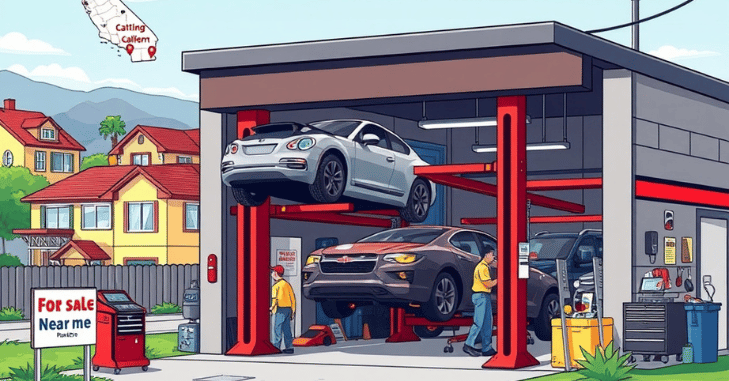
California offers many listings for auto repair shops, including both for sale and franchise opportunities. This gives you a chance to buy into an existing operation or purchase (or convert) it into a franchise. Key data:
- On sites like BizBuySell, you’ll find many auto repair and service shops for sale in California. For example, multiple listings mention “auto repair shop for sale, California” with asking prices from hundreds of thousands of dollars, sometimes including franchise opportunities.
- Franchise networks such as AAMCO and All Tune list initial franchise fees, ongoing royalties, and territory models. For instance, All Tune shows an initial franchise fee of around $44,000 and a royalty of 6.5%, with specific advertising investment requirements.
- Also, there are opportunities to buy the business and/or real estate (or lease) in a turnkey setup, allowing for a quicker launch. For example, a listing notes an established California shop, 30+ years old, for sale with strong cash flow.
- Whether you buy a franchise or an independent site, you’ll want to review financials (revenue, cost of goods, labor costs, rent/lease terms), location demographics, competition (other repair shops nearby), and zoning/regulatory compliance (especially California’s environmental, emissions, and waste-oil disposal regulations).
Business Plan Essentials for an Auto Repair Shop Franchise
A strong business plan is key, whether you’re buying an existing shop or launching a new franchise. Important components include:
Executive Summary
- Describe the franchise brand or concept you’re adopting, why California (location) is promising, and the target market (local drivers, commuters, fleet vehicles)
- Define your value proposition (24/7 service? Quick turnover? Specialty in certain vehicle types or performance vehicles?)
Market Analysis
- Analyze local population demographics, vehicle ownership rates, and commuting patterns
- Determine competitors in the area (independent repair shops, dealerships, chain brands)
- Identify gaps (e.g., lack of multi‑brand independent rapid service, mobile services, specialty EV/hybrid work)
Services & Revenue Streams
- List primary services (maintenance, diagnostics, repair) and secondary ones (fleet servicing, mobile repair, vehicle pick‐up/drop‐off)
- Project revenues and margins for each service line
Location & Site Plan
- Describe the site: zoning compliance, size (bays, lifts, parking), accessibility, sign visibility
- If in a residential‐adjacent zone, note noise/odor mitigation, hours of operation, permitted uses
Operations & Staffing
- Number of bays, lifts, techs, service advisors
- Shift schedule, working hours, expected service throughput
- Standard operating procedures (most franchises provide this)
Marketing & Customer Acquisition
- Brand marketing (if franchise) plus local promotion (digital presence, local SEO: “auto repair shop near me”, local vehicle clubs, fleet contracts)
- Customer retention programs, referral marketing, and partnerships with local dealerships or fleets
Financial Projections & Costs
- Startup cost or conversion cost: franchise fee (if any), real estate or lease, equipment (lifts, diagnostic machines), signage, initial inventory
- Operational costs: rent/lease, utilities, labor, parts/inventory, waste disposal compliance, insurance
- Revenue projections and break‑even analysis
- Risk assessment (market shifts, regulatory changes, competition)
Regulatory & Compliance
- In California, you need to comply with the California Bureau of Automotive Repair (BAR) licensing and ongoing requirements (automotive repair, smog check, brake/lamp service) as noted in their Business Quick Start Guide.
- Environmental rules (waste oil, coolant disposal, air quality, signage, parking)
- Zoning and permits (especially if adjacent to a residential area)
Exit Strategy & Growth Plan
- For franchises: multi‐unit expansion, territory growth
- For independents: sell or convert to a franchise later, or add ancillary services (detailing, mobile repair)
- Consideration of the sale listing value at some point
Opportunities and Challenges in California

Opportunities
California presents several strong opportunities for auto repair shop franchises. The state has one of the largest populations of cars and trucks in the country, ensuring steady, recurring demand for repair and maintenance services. Franchise owners also benefit from established brand recognition, proven business systems, and operational support, all of which reduce startup risks and make the business easier to scale. You might also like Can Online Reputation Affect Job Opportunities.
Additionally, continued urban and suburban expansion, along with busy commuting areas, creates a growing need for convenient “near me” auto repair locations. Another significant opportunity lies in the demand for specialized services, as aging vehicles and the rapid rise of hybrid and electric cars increase the need for advanced diagnostics, battery maintenance, and expert technicians.
Challenges
Despite its strong potential, opening an auto repair franchise in California comes with notable challenges. Zoning and environmental regulations can be strict, especially in residential-adjacent areas where rules on operating hours, noise, emissions, and signage may limit suitable locations. Real estate costs also present difficulties. Commercial properties in California are expensive, and finding properly zoned spaces can be tough.
One Reddit post even highlighted how securing small auto-repair–approved properties in the Sacramento region has become increasingly challenging. The market is also highly competitive, with independent garages, major chain brands, and dealership service centers all vying for customers, which makes differentiation and operational excellence essential.
In addition, franchises must meet regulatory requirements, including state BAR licensing, smog and emissions rules, and proper disposal of hazardous materials. Finally, labor remains a hurdle. Skilled technicians and service advisors are in high demand, making it challenging to hire or retain qualified staff. As one Reddit commenter noted, buying a shop without experience can make an owner vulnerable to staffing and operational issues.
Residential Area Fit: What to Know
If you intend to locate your repair shop near or in a residential area, consider:
- Zoning: The property must be zoned to allow automotive repair. If it is purely residential zoning, it may not be permissible.
- Hours of operation: Close to homes, you may need to limit hours and avoid disruptive activities (night work, loud engines).
- Parking and traffic: Auto repair shops bring customer vehicles and staff vehicles—will local roads support this?
- Odors and noise control: Consider soundproofing, proper ventilation, and waste disposal to minimize negative impact on nearby homes.
- Community relations: Being a good neighbor can matter; building trust helps with reputation and referrals in a local community.
Case Example of Franchise Opportunity
Let’s look at a specific example to illustrate: All Tune’s franchise model states: Initial franchise fee approx—$ 44,000. Royalty on sales is 6.5%. Requires marketing spend of $5,000/month for the first six months, then a minimum $2,500 or 5% of sales for the next 36 months.
This gives potential franchisees a clear model, but you must also factor in lease costs, equipment, build-out, staff, inventory, and local market conditions.
In California, you might find “auto repair shop for sale” listings, such as a shop in Alameda County, CA, that has been operating for 45 years, is fully equipped, and is for sale, offering a chance to acquire an established business instead of starting from scratch.
Finding For Sale Listings & Franchise Matches

Here’s how you can approach the market to find what fits:
- Broker sites: Platforms like BizBuySell, BizTrader list “Auto repair & service shops for sale – California”. You can filter by franchise, independent, size, and cash flow.
- Franchise portals: Sites like the All Tune franchise page or franchise resales sites (FranchiseResales.com) let you search for automotive franchise opportunities in California.
- Due diligence: Review lease terms, equipment state (lifts, diagnostics), predominant vehicle types serviced, year‐over‐year revenues & expenses, local competition, and customer reviews.
- Conversion/affiliation models: Some franchises (e.g., Orozco’s Auto Service) allow existing independent shops to convert and join the franchise network, benefiting from branding and support.
- Franchise disclosure document (FDD): If buying a franchise, review the FDD for costs, territory rights, royalty fees, marketing fees, and support services.
Business Plan Example Snapshot for a California Auto Repair Franchise
Here’s a condensed snapshot you might include in your business plan:
- Target Market: Suburban commuter zone of 100,000+ vehicles within 5 5-mile radius, average car age 10+ years.
- Site: 4‑bay facility, 3 lifts, 2 parking spaces out front for waiting customers, location in edge‐commercial park adjacent to residential zone (zoned M‐1 automotive).
- Services offered: Preventive maintenance, diagnostics, brake & lamp service, smog check, fleet accounts (5 local companies), mobile pick‐up/drop‐off service.
- Staffing: 2 certified technicians, 1 service advisor, 1 assistant/dispatcher.
- Marketing: “Auto repair shop near me” SEO campaign, local Google Business listing, partnerships with local dealerships, loyalty program, and 10% discount for first‐time customers.
- Financials: Year 1 revenue target $750,000; cost of goods (parts + oil, etc) 35%; labor cost 20%; rent/lease $8,000/month; other overhead $5,000/month; break‐even in month 10.
- Regulatory compliance: Obtain California BAR repair registration; ensure waste oil disposal contract; sign permit; fire code clearance; adjacent residential hours: 8 am–7 pm.
- Expansion plan: Year 3, consider adding 2 more lift bays and a mobile service vehicle. Year 5: add a second location or convert to a multi‐unit franchise.
Conclusion
Investing in an Auto Repair Shop Franchise in California offers a compelling blend of steady demand, recurring revenue, and long-term business potential. With millions of vehicles on the road, customers continually need maintenance, diagnostics, repairs, smog checks, and specialty services, creating a reliable market that rarely slows down.
Success, however, depends on choosing the right franchise model, securing a properly zoned location, understanding regulatory requirements, and building a skilled team. Whether you’re launching a new franchise location, converting an existing shop, or purchasing a business already for sale, a clear business plan and innovative market research are essential.
With the right strategy, customer service focus, and operational efficiency, an Auto Repair Shop Franchise can grow into a profitable, trusted business that serves local communities and expands across California’s busy automotive landscape.
Want to know about Is Claire’s Going Out of Business? Store Closures in the UK, Canada, Texas, California, the USA & ‘Near Me’ Updates Check out our Business category.
FAQs
The most profitable auto repair businesses are those that offer specialized, high-demand services with strong margins, such as transmission repair, engine diagnostics, hybrid/EV battery services, and fleet maintenance.
Margin of Profit: Depending on the type of product and market conditions, a decent profit margin for auto parts typically falls between 15% and 30%.
An auto repair shop, sometimes locally referred to as a garage or workshop, is a facility where auto mechanics and technicians repair cars.
For more insights on how busy professionals can manage their finances effectively, check out How CPAs Offer Peace of Mind to Busy Professionals.