Bank Reconciliation Statement: A Practical Guide for Accurate Small-Business Books

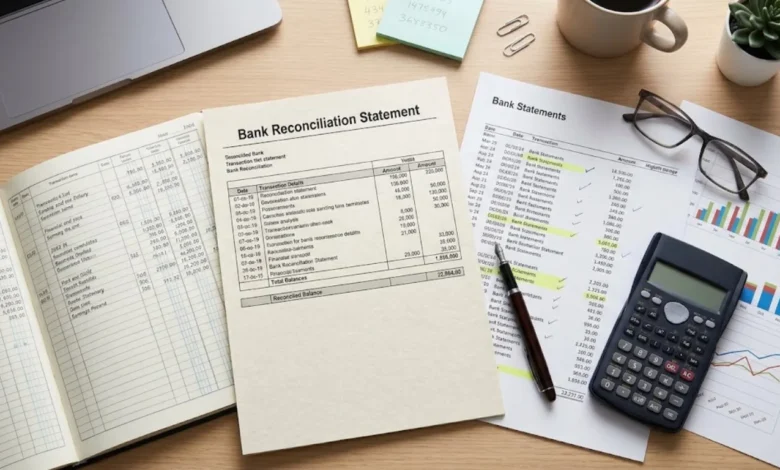
A bank reconciliation statement explains differences between your bank records and your business accounting records. It helps confirm that both records reach the same adjusted cash balance. Regular reconciliation also makes bookkeeping errors and unusual transactions easier to find.
Direct answer: A bank reconciliation statement compares your bank statement with your accounting records for the same period. You identify missing transactions, timing differences, fees, and errors. Then you adjust the appropriate records until the reconciled balances agree.
Bank Reconciliation at a Glance
| Item | What It Means |
|---|---|
| Main purpose | Explain differences between bank and book balances |
| Records compared | Bank statement and accounting ledger or cash records |
| Common differences | Outstanding checks, deposits in transit, fees, interest, errors |
| Typical frequency | Monthly for many small businesses; more often for higher activity |
| Final result | Adjusted bank and book balances should agree |
| Useful for | Accurate bookkeeping, cash monitoring, reviews, and audit support |
Key Takeaways
* Reconciliation compares bank activity with your company’s recorded cash activity. * Timing differences do not always require changes to your accounting records. * Bank fees, interest, and returned payments may require book adjustments. * Unexplained differences should be investigated rather than carried forward indefinitely. * Higher transaction volumes can justify weekly or even daily reconciliations. * A documented reconciliation creates a useful record for accountants, owners, and auditors.
What Is a Bank Reconciliation Statement?

A bank reconciliation statement is a record showing why two cash balances differ. One balance comes from your bank statement. The other comes from your company’s books.
The document lists reconciling items and shows how each affects the comparison. Examples include outstanding checks and deposits that have not cleared. Bank fees or accounting errors can also create differences.
The goal is not to force two numbers to match without explanation. Each difference should have a clear reason and supporting record. When completed correctly, the adjusted balances should agree.
AccountingTools describes the statement as a way to compare internal checking activity with bank-reported activity. It also highlights timing differences and bank charges as common causes. This makes reconciliation an important control for everyday bookkeeping.
Why Bank Balances and Book Balances Differ
Differences often occur even when nobody made a mistake. Banks and businesses can record the same transaction on different dates. Processing times create many routine reconciliation items.
For example, your company may issue a check on March 30. The recipient might not deposit it until April 3. Your books show the payment before the bank does.
Deposits can create the opposite timing issue. Your books might record a customer payment immediately. The bank may not post the deposit until the following business day.
Other differences require an accounting adjustment. A bank may deduct service fees before your bookkeeper records them. Interest income or returned customer payments can create similar gaps.
Common reconciling items fall into the following groups.
* Outstanding checks. * Deposits in transit. * ACH payments not yet recorded. * Monthly bank service charges. * Interest earned. * Returned or rejected payments. * Duplicate bookkeeping entries. * Incorrect transaction amounts. * Unauthorized charges. * Merchant-processing settlement differences.
Business owners should avoid treating every mismatch as harmless timing. An unexplained difference may indicate a recording problem or unauthorized activity. Consistent review makes those problems easier to investigate.
BusinessVert’s guide to common bookkeeping errors that can affect your taxes also identifies failed reconciliation as a bookkeeping risk. Accurate records support both tax preparation and daily decision-making. They also reduce cleanup work later.
Bank Statement vs. Bank Reconciliation Statement
A bank statement and reconciliation statement serve different purposes. Your financial institution creates the bank statement. Your business prepares the reconciliation.
The bank statement reports transactions processed through the account. It may include deposits, withdrawals, transfers, fees, and interest. It does not confirm that your accounting books contain every transaction correctly.
A reconciliation document compares those bank transactions against your own records. It explains why balances differ and identifies needed corrections. That comparison provides information the bank statement alone cannot supply.
| Bank Statement | Reconciliation Statement |
|---|---|
| Issued by the bank | Prepared by the business |
| Shows processed account activity | Compares bank activity with business records |
| Reports the bank’s ending balance | Explains differences between balances |
| Does not correct your books | Identifies possible book adjustments |
| Covers a defined statement period | Documents the reconciliation process |
How to Prepare a Bank Reconciliation Statement
The reconciliation process becomes easier when you follow the same sequence each period. Gather complete records before making any adjustments. Keep documentation for items that remain outstanding.
1. Gather the Records
Download the bank statement for the period you want to reconcile. Pull the matching cash ledger from your accounting system. Make sure both records cover the same dates.
You may also need deposit records and check information. Merchant processor reports can help businesses accepting card payments. Keep supporting documents nearby for unusual transactions.
2. Compare Opening and Ending Information
Confirm that the opening bank balance matches the prior period’s ending information. Then note the current statement’s closing balance. Record your accounting ledger balance for the same date.
A prior unresolved difference can affect the new reconciliation. Investigate old items before assuming they remain valid. Stale checks and duplicate entries deserve special attention.
3. Match Deposits and Incoming Payments
Compare each recorded deposit against the bank statement. Confirm dates and amounts wherever possible. Mark transactions that appear correctly in both records.
List deposits that your books record but the bank has not processed. These are commonly called deposits in transit. They usually affect the bank-side reconciliation rather than requiring another book entry.
4. Match Checks, Transfers, and Withdrawals
Review payments recorded in your books against bank withdrawals. Check amounts, dates, payees, and transaction references. Identify payments that have not cleared.
Outstanding checks are a common example. Your books already recognize the payment, but the bank balance has not changed. That difference normally remains a reconciling item until the check clears.
5. Record Bank-Only Activity
Look for transactions appearing on the bank statement but missing from your books. Common examples include fees, interest, returned payments, and automatic withdrawals. These items often require accounting entries.
Do not enter an unfamiliar charge simply to make the balance agree. First, confirm what the transaction represents. Contact your bank when activity appears unauthorized or incorrect.
6. Correct Bookkeeping Errors
Errors can occur in either set of records. Your books may contain a duplicate transaction or incorrect amount. Banks can also make errors, although they are less common.
Correct confirmed mistakes in the appropriate record. Keep notes explaining material changes. A clear record helps another reviewer understand what happened.
7. Confirm the Adjusted Balances Agree
Calculate the adjusted bank balance after considering valid timing items. Calculate the adjusted book balance after recording needed entries. Both adjusted balances should now match.
Do not close the reconciliation when an unexplained difference remains. Research the difference until you understand its cause. Small unexplained balances can become harder to trace later.
Bank Reconciliation Statement Example
Consider a U.S. service business completing its monthly reconciliation. Its bank statement shows an ending balance of \$25,400. Its accounting records show \$24,650.
The owner identifies several differences during the review. A \$1,200 customer deposit has not reached the bank statement. A \$750 check also remains outstanding.
The bank statement includes a \$50 service fee not recorded in the books. It also includes \$100 of interest income. Those bank-only items require book adjustments.
| Reconciliation Item | Amount | Treatment |
|---|---|---|
| Bank statement balance | \$25,400 | Starting bank balance |
| Add deposit in transit | +\$1,200 | Bank-side adjustment |
| Subtract outstanding check | -\$750 | Bank-side adjustment |
| Adjusted bank balance | \$25,850 | Reconciled balance |
| Book balance | \$24,650 | Starting book balance |
| Add missing recorded receipt found during review | +\$1,150 | Book correction |
| Add interest income | +\$100 | Book adjustment |
| Subtract bank fee | -\$50 | Book adjustment |
| Adjusted book balance | \$25,850 | Reconciled balance |
This example shows why the initial balances can differ without implying fraud. Some differences reflect timing, while others require accounting changes. The reconciliation explains each item before reaching the final balance.
How Often Should a Business Reconcile Its Bank Accounts?
Monthly reconciliation is a practical starting point for many small businesses. It aligns naturally with monthly financial reporting and bank statements. Higher transaction volume may justify more frequent reviews.
Sage notes that smaller businesses may reconcile monthly. Businesses with greater transaction complexity can benefit from weekly or daily reconciliation. The right schedule depends on activity and operational risk.
A retailer processing hundreds of daily transactions faces different risks than a consultant sending ten monthly invoices. Card processors can also create settlement delays and fee differences. More frequent reconciliation can keep those differences manageable.
Accurate monthly books also support higher-level financial analysis. BusinessVert’s article on accountants and advisory services explains why current financial records matter for useful advice. Decisions become harder when accounting information remains months behind.
Why Reconciliation Matters for U.S. Small Businesses
Reliable books help owners understand how much cash is available. A bank balance alone cannot explain unpaid checks or unrecorded obligations. Your accounting system also needs accurate transaction data.
Regular reconciliation can detect duplicate entries and missing transactions sooner. It can also bring unauthorized charges to your attention. QuickBooks and NetSuite both identify error detection as a central reconciliation benefit.
Good records become especially useful during tax preparation or an examination. BusinessVert’s U.S. tax audit guide discusses the importance of bank records and supporting documentation. Reconciled accounts can make transaction histories easier to explain.
Professional support can become useful as transaction complexity increases. BusinessVert’s guide to professional accounting for small businesses covers the value of repeatable financial routines. An accountant or bookkeeper can also review reconciliations for unusual or unresolved items.
Manual Reconciliation vs. Accounting Software
Manual reconciliation works for businesses with limited transaction volume. You can compare records using a spreadsheet and bank statements. The process becomes slower as transaction counts increase.
Accounting software can import bank activity and suggest transaction matches. That reduces repetitive comparison work. You still need human review for unusual or unmatched items.
Automation does not remove responsibility for accurate bookkeeping. Incorrect matching rules can create new errors. Someone should review exceptions and confirm the final adjusted balance.
Businesses should also separate preparation and review when practical. One person can prepare the reconciliation while another checks significant items. That extra review strengthens internal control.
Common Bank Reconciliation Mistakes
One common mistake is adjusting the wrong side of the reconciliation. Outstanding checks usually explain bank-side timing differences. They should not be recorded twice in your books.
Another mistake is carrying unexplained amounts from month to month. Temporary timing items should eventually clear. Old reconciling items need investigation.
Owners also sometimes reconcile only the main checking account. Savings accounts, payment clearing accounts, and credit cards may need separate review. Each financial account should have reliable supporting records.
Finally, do not rely entirely on downloaded bank feeds. Software imports can contain duplicates or missing connections. Compare the finished reconciliation with source records before closing the period.
Make Reconciliation Part of Your Monthly Close
A reliable reconciliation process gives you more confidence in your cash records. Use the same process each month and investigate unresolved differences promptly. Save the completed report with supporting financial records.
As your company grows, review whether monthly reconciliation remains frequent enough. More accounts and payment channels can create additional timing differences. Strong bookkeeping routines help you catch those issues before they accumulate.
For more practical U.S. business and finance guidance, explore the latest BusinessVert resources. Use those resources alongside advice from your accountant when decisions depend on your specific records. Keep financial controls practical, documented, and consistent.
Frequently Asked Questions
What is the purpose of a bank reconciliation statement?
A bank reconciliation statement explains differences between your banking records and internal accounting records. It helps verify that transactions were recorded correctly. It also documents items that remain outstanding.
What are the most common reconciling items?
Outstanding checks and deposits in transit are common timing differences. Bank fees, interest, and returned payments can require book adjustments. Recording errors may also create differences.
Does a reconciliation change the bank statement?
No, your business does not rewrite the bank’s statement. You adjust your accounting records when necessary. Valid bank errors should be reported to the financial institution.
Should every difference create a journal entry?
No, timing differences generally do not require duplicate accounting entries. The transaction may already exist correctly in your books. Bank-only activity or bookkeeping errors often require adjustments.
How often should a small business reconcile accounts?
Many small businesses can start with monthly reconciliation. Higher-volume operations may benefit from weekly or daily reviews. Choose a schedule that keeps unresolved transactions manageable.
Can bank reconciliation help detect fraud?
Reconciliation can expose transactions that need investigation. Unexpected withdrawals or altered amounts may become visible during comparison. It is one control among several that businesses can use.