Trading Under Pressure: How Experienced Traders Can Adapt to Rapidly Changing Market Conditions

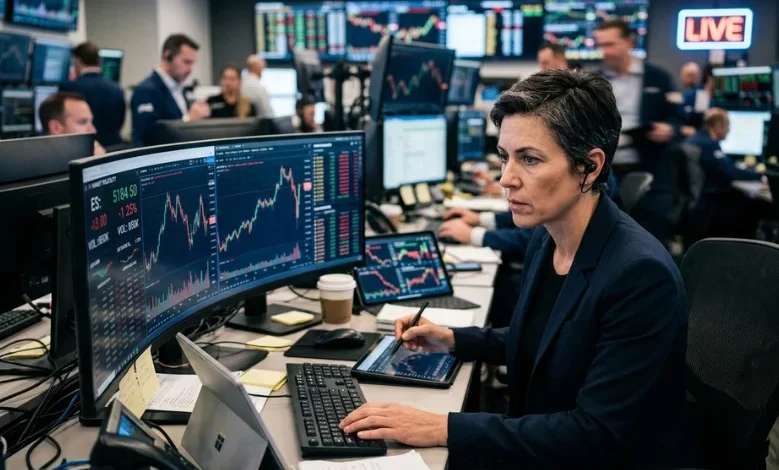
Markets rarely move according to a comfortable schedule. A session that begins quietly can turn volatile after an economic announcement, unexpected corporate development, geopolitical event, or sudden shift in investor sentiment. For experienced traders, the challenge is not simply identifying what is happening. It is making disciplined decisions while prices move quickly and familiar patterns become less reliable.
Pressure can expose weaknesses that are easy to overlook during calmer periods. Traders may enter too quickly, increase position sizes, abandon predefined exits, or allow a losing position to influence the next decision. Adapting to changing conditions therefore requires more than technical knowledge. It requires a structured approach to risk, decision-making, and emotional control.
Recognising When Market Conditions Have Changed
One of the first skills experienced traders develop is recognising when the environment no longer resembles the one in which their original strategy was designed to operate. Volatility, liquidity, spreads, momentum, and correlations can all change during a trading session. A strategy that performs consistently in a directional market may behave very differently when prices become choppy or news-driven.
This does not mean every sharp price movement requires immediate action. Instead, traders can monitor whether several conditions are changing simultaneously. Wider spreads, unusually large candles, rapid reversals, expanding trading ranges, and increased volume can signal that normal market behaviour has shifted. Recognising these changes early allows traders to reassess rather than automatically continue with the same approach.
Experienced traders can also distinguish between a temporary disturbance and a genuine change in market structure. This distinction is important because constantly reacting to every movement can create unnecessary trades. A disciplined trader observes first, evaluates the available information, and then determines whether the existing strategy still makes sense under the new conditions.
Managing Risk When Decisions Must Be Made Quickly
Risk management becomes particularly important when markets accelerate. The temptation to increase exposure can be strong when a trader believes a major move is developing, but larger positions also magnify the consequences of being wrong. Established trading principles generally emphasise controlling potential losses before focusing on potential returns, particularly during periods of elevated uncertainty.
Position sizing is one practical way to maintain that discipline. When volatility increases, reducing the size of a position can help keep potential losses within an acceptable range. Traders may also reconsider stop placement because a stop that works during ordinary conditions could be triggered too easily when price fluctuations become unusually large. The objective is not to avoid losses entirely, but to prevent an individual trade from causing disproportionate damage.
Access to reliable execution and market information can also matter when conditions change rapidly. Traders evaluating platforms and brokerage services, including resources available through www.ads-securities.com, should consider factors such as execution capabilities, available instruments, trading tools, and risk-management functionality. The specific suitability of any service depends on the trader’s circumstances, strategy, jurisdiction, and understanding of the associated risks.
Staying Disciplined When Emotions Intensify
Experienced traders are not immune to emotions. Confidence can become overconfidence after a successful trade, while a sudden loss can create an urge to immediately recover the money. Rapid markets can amplify both reactions because decisions often have to be made within seconds or minutes.
A useful response is to establish decision rules before pressure increases. Traders can define maximum acceptable losses, conditions for entering a position, circumstances that require reducing exposure, and situations in which trading should stop altogether. Written rules can provide an objective reference when emotions make impulsive decisions feel justified.
It is equally useful to separate the quality of a decision from its immediate outcome. A well-planned trade can lose money, just as an impulsive trade can occasionally produce a profit. Professional development comes from evaluating whether the process was sound, rather than judging every decision solely by its result.
Using Flexibility Without Abandoning the Trading Plan
Adapting does not mean constantly changing strategies. In fact, excessive adjustment can make performance difficult to evaluate because the trader never knows which approach is actually responsible for an outcome. Flexibility works best when it operates within clearly defined boundaries.
For example, a trader might have different procedures for low-volatility, trending, and highly volatile conditions. The underlying principles remain consistent, while position size, entry requirements, trade frequency, or exposure may change. This creates a framework that can respond to different environments without turning every unexpected movement into a completely new trading strategy.
Technology can support this process, but it should not replace judgment. Charts, alerts, economic calendars, analytical tools, and automated risk controls can help traders process information efficiently. However, more information is not necessarily better information. During fast markets, concentrating on the indicators and data directly connected to the trading plan can reduce distraction and improve decision quality.
Conclusion
Rapid market changes are an unavoidable part of trading, but they do not have to dictate a trader’s behaviour. Recognising shifts in volatility, adjusting exposure appropriately, following predefined risk parameters, and maintaining emotional discipline can help traders respond more deliberately when conditions become difficult.
Experience becomes especially valuable when it is combined with preparation and consistent self-evaluation. Markets will continue to change, and no strategy works identically in every environment.