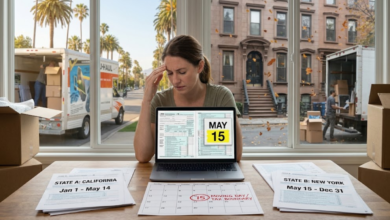
Personal tax preparation is simpler with a professional accountant because they turn a pile of forms, receipts, and life changes into an organized, accurate return, while catching deductions and credits you might miss and reducing the risk of IRS notices. The biggest gains come when your return is no longer routine: side income, investments, a new child, a home sale, or a move between states.
If your taxes involve a single W-2 and the standard deduction, filing yourself may work fine. Once your situation gets more complex, an accountant replaces guesswork with a clear process. This guide explains what an accountant actually does, how DIY compares with professional help, how to choose the right person, and what you can do now to make tax season easier.
Why Filing Your Own Return Gets Harder Than Expected
On paper, a tax return is straightforward: report income, claim deductions or credits, calculate what you owe or are owed, and file. Real life is less tidy. A job change can mean two W-2s and withholding that no longer matches your income. Freelance work brings 1099 forms, business expenses, and self-employment tax. Selling stock or crypto triggers capital gains reporting. Marriage, divorce, a new baby, or college tuition can change your filing status and eligibility for credits.
Each change adds a decision, and each decision is a chance to get something wrong. Many people find the stress is less about the math and more about the worry that they missed something. Even first-time filers often have questions about filing status, which documents they need, and deadlines. The IRS Taxpayer Advocate Service publishes resources for first-time filers precisely because the process is less obvious than it looks.
Taxes also compete with everything else: work, family, and bills. Many people find tax season tiring because of the mental load, not because any single calculation is hard. A professional accountant gives that load a structure. You supply the documents and the context, and they turn those pieces into a return that reflects your actual situation.
What a Professional Accountant Actually Does
A good accountant does far more than type numbers into software. During personal tax preparation, they typically:
- **Review your documents** for missing forms, such as a 1099 you forgot about or a brokerage statement that arrives late
- **Ask the right questions** about life events, side income, and expenses that may affect your return
- **Identify deductions and credits** you qualify for, such as education credits, the child tax credit, retirement contribution benefits, or business expense deductions
- **Decide between itemizing and the standard deduction** based on your actual numbers
- **Handle self-employment details** such as Schedule C expenses, self-employment tax, and estimated quarterly payments
- **Check for consistency** with prior-year returns to avoid errors that trigger notices
- **Help you respond** if the IRS or your state sends a letter after filing
A Common Example
Suppose you worked a salaried job for half the year and then started freelancing. You now have a W-2, several 1099-NEC forms, equipment and software costs, a home office question, and possibly an underpayment of tax because no one withheld anything from your freelance income. Filing yourself is possible, but it is easy to misclassify expenses, overlook the home office rules, or forget that self-employment income carries its own tax. An accountant walks through each item, explains the trade-offs, and sets up estimated payments so next year goes more smoothly.
People with business income often benefit from someone who handles both personal and business returns. That is one reason many sole proprietors work with firms that serve both, such as small business accountants in Chesterfield, so their personal return and business records stay aligned.
DIY Filing vs. a Professional Accountant
| Factor | DIY filing | Professional accountant |
|---|---|---|
| Time required | Often several hours, more if records are scattered | Less of your time; the accountant guides document review |
| Accuracy | Depends on your knowledge of current rules | Higher when handled by a trained preparer |
| Deductions and credits | Easy to miss ones you have not heard of | More likely to be identified and documented |
| Complex income | Confusing with multiple income types | Handled with context and planning |
| Notices after filing | You sort them out alone | You have support and, with the right credentials, representation |
| Cost | Software fees or free options | Professional fee, often based on complexity |
When Professional Help Makes Sense
Consider hiring an accountant if any of these apply:
- You are self-employed, freelance, or have a side business
- You bought, sold, or rented out property
- You sold investments, received stock compensation, or traded cryptocurrency
- You married, divorced, had a child, or became a caregiver this year
- You lived or worked in more than one state
- You took a retirement distribution or rolled over an account
- You received a letter from the IRS or your state tax agency
If none of these apply and your income is modest, free options may be enough. The IRS Free File program and the Volunteer Income Tax Assistance (VITA) program help many eligible taxpayers file at no cost.
How to Choose a Qualified Tax Professional
Credentials matter because your return is a legal document and part of your financial records. Anyone who prepares returns for pay must have a Preparer Tax Identification Number (PTIN), but qualifications beyond that vary:
- **Certified Public Accountants (CPAs)** are licensed by state boards and can represent clients before the IRS on any tax matter.
- **Enrolled Agents (EAs)** are licensed by the IRS and also have unlimited representation rights.
- **Tax attorneys** handle legal tax issues and can represent clients as well.
- **Other preparers** may have limited or no representation rights, depending on their credentials.
The IRS explains these differences and offers tips on choosing a tax professional. Red flags include a preparer who bases the fee on the size of your refund, asks you to sign a blank return, or will not sign the return as the paid preparer.
What You Can Do Right Now to Make Tax Season Easier
1. Gather Your Records First
Collect income forms (W-2, 1099s, brokerage statements), your prior-year return, receipts for deductible expenses, and any letters you received from tax agencies. Put everything in one folder, physical or digital. Collect first, sort second.
2. List This Year’s Life Changes
Write down anything that changed: marriage, divorce, a new child, a move, education costs, home purchase or sale, retirement distributions, or freelance work. A short list helps your accountant see the full picture quickly.
3. Track Business and Side-Income Expenses as You Go
If you have self-employment income, keep a simple spreadsheet or use an app to log expenses monthly. Reconstructing a year of receipts in April is where most errors creep in.
4. Book Early
Many accountants are fully booked by late winter. Reaching out in January, or earlier, gives you time to ask questions and avoid a rushed filing or an extension you did not plan for.
5. Choose Qualifications Over Speed
A fast turnaround is tempting when you are stressed, but accuracy matters more. Look for clear credentials, good communication, and a process that includes reviewing the return with you before it is filed.
Mistakes That Make Personal Taxes Harder
- Waiting until the week of the deadline to start
- Forgetting income reported on a 1099 the IRS also receives
- Mixing personal and business expenses in one account
- Not making estimated payments on freelance income
- Ignoring IRS letters rather than responding by the stated date
This article is general information, not tax advice. Rules change and every situation is different, so speak with a qualified tax professional about your own return.
Bottom Line
Personal taxes get simpler with a professional accountant once your finances stop being routine. You gain an organized process, fewer missed deductions, a lower risk of notices, and someone to call if a letter arrives. Start by gathering your documents and listing life changes, then choose a credentialed preparer early in the season. To see how firms are improving service with data, read how accounting firms use analytics to improve client outcomes, or browse our finance category.
Frequently Asked Questions
Is it worth paying an accountant for personal taxes?
It often is when your return includes self-employment income, investments, property, or major life changes. An accountant can find deductions and credits you might miss and reduce the risk of errors that lead to IRS notices.
What documents should I bring to my accountant?
Bring your W-2s and 1099s, brokerage and retirement statements, your prior-year return, receipts for deductible expenses, and any letters from the IRS or your state. A list of life changes from the year is also helpful.
What is the difference between a CPA and an enrolled agent for taxes?
A CPA is licensed by a state board and works across accounting and tax, while an enrolled agent is licensed by the IRS and specializes in tax. Both have unlimited rights to represent taxpayers before the IRS.
Can I file my own taxes for free?
Many taxpayers can. The IRS Free File program and the Volunteer Income Tax Assistance program help eligible people file at no cost, and simple returns often work well with these options.
When should I contact an accountant for tax season?
Reach out early in the year, ideally in January or before the previous year ends. Many accountants are fully booked by late winter, and early contact leaves time for planning and questions.