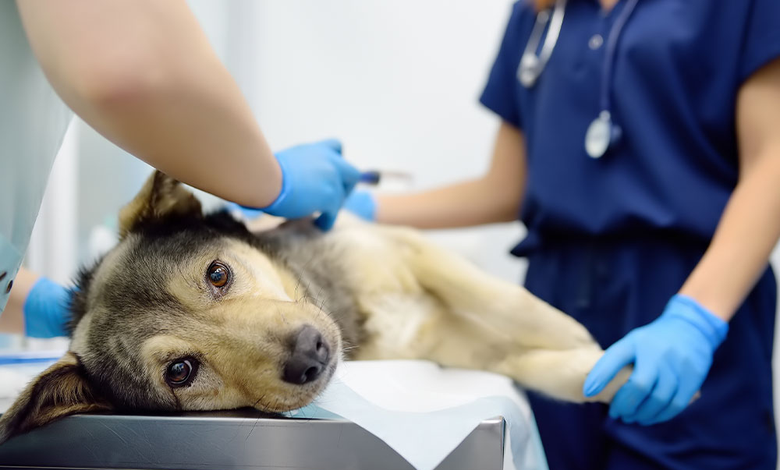
Your dog’s breath has become hard to be around, or your cat has started chewing on one side and leaving kibble in the bowl. The holdup is rarely money or willingness. It is the carrier, the car ride, the parking lot, and a pet who treats the outing as a betrayal. Mobile veterinary care removes most of that friction, which is why house-call practices and outfitted mobile units have spread so fast. Booking a provider such as an Annapolis mobile vet means the exam comes to your driveway instead.
What confuses people is how much the word mobile can cover. One practice arrives in a sedan with a stethoscope and a lab kit. Another rolls up in a custom truck carrying an anesthesia machine, digital dental radiography and a surgical table. Both are legitimate, and they do very different jobs. That gap matters enormously once dentistry enters the conversation.
What mobile veterinary dentistry and diagnostics actually cover
A house-call veterinarian handles everything that does not require an unconscious patient, and that list is longer than most owners assume. Wellness exams, vaccines, an oral assessment of every visible tooth, blood and urine collection, fecal sampling, cytology, blood pressure checks, mobility evaluations and end-of-life care all work comfortably in a living room.
A mobile surgical unit is a different animal: a built-out truck with a lift, oxygen, an anesthesia machine and vaporizer, monitoring equipment, a wet table, an ultrasonic scaler, a high-speed dental handpiece and, in the good ones, a digital dental radiography sensor. That vehicle runs a full dental procedure from induction to recovery without your pet entering a hospital.
Diagnostics travel better than they used to. Bench analyzers shrank, ultrasound probes now clip onto tablets, and reference labs run same-day courier pickups in most metro areas. A mobile veterinarian can draw a sample in your kitchen, run a chemistry panel in the van, and have outside results, including specialized parasitology services for pets, back within a day or two.
Anesthesia-free cleaning versus real veterinary dentistry
This is the most important distinction in the whole category, and it is where owners get quietly misled. Anesthesia-free dental scaling, often sold at grooming salons or pet stores, means restraining a conscious animal and scraping visible tartar off the outer surface of the crowns. The teeth end up looking cleaner. That is the entirety of what happened.
Periodontal disease does not live on the part of the tooth you can see. It lives in the sulcus, the narrow pocket between gum and tooth, and in the bone and ligament holding the root in place. Treating it means probing each tooth at several points, scaling below the gumline, radiographing the roots, and sometimes extracting teeth that look fine from above. None of that happens on an awake patient.
The American Veterinary Dental College and the American Animal Hospital Association have both taken public positions against non-professional dental scaling on conscious animals. The objection is not about credentials. It is that the procedure delivers a cosmetic result while the real disease continues underneath, with sharp instruments near an unsedated airway.
Bad breath is usually what an owner notices first, and it is rarely just food. Persistent odor means bacterial load and tissue breakdown, which means the trouble is already below the gumline. A cleaning that never goes below the gumline cannot touch it.
What periodontal staging tells you about the treatment plan
Veterinarians stage periodontal disease tooth by tooth, not mouth by mouth. One canine can be perfectly healthy while the molar behind it has lost most of its bony support. The staging language is worth knowing, because it drives what gets saved and what comes out.
- Stage 1 is gingivitis with no attachment loss. Gums are inflamed and bleed on probing, but the supporting structures are intact. Genuinely reversible with a cleaning and home care.
- Stage 2 is early attachment loss, up to about a quarter of the root support. Pockets are forming, and careful cleaning plus monitoring usually holds the line.
- Stage 3 is moderate, roughly a quarter to half of support gone. The conversation shifts to advanced periodontal therapy versus extraction, depending on the tooth.
- Stage 4 is advanced, with more than half the support lost. These teeth are painful, mobile and infected. Extraction is usually the kind option.
Owners resist extractions, picturing a pet unable to eat. In practice dogs and cats do well with fewer teeth and eat better afterward, because the chronic pain is gone. Cats who have had full-mouth extractions for stomatitis often start grooming and playing again within weeks.
Why dental radiographs change the plan so often
Roughly two-thirds of every tooth sits below the gumline. Without radiographs, a veterinarian treats the third they can see and guesses at the rest. Intraoral films routinely turn up root abscesses under intact-looking crowns, retained fragments from old extractions, bone loss the probe underestimated, and unerupted teeth inside cysts.
Cats add a specific problem. Tooth resorption destroys the tooth from the inside out and stays invisible until it breaches the enamel. Radiographs show whether the root is intact, which decides whether the tooth can be extracted conventionally or whether crown amputation is right. If a provider offers anesthetized dentistry without imaging, ask what happens when they find something.
Extractions, nerve blocks and pain control
A simple extraction on a small single-rooted tooth means cutting the periodontal ligament and elevating the tooth out. A surgical extraction is genuine oral surgery: raising a gingival flap, removing bone with a bur, sectioning a multi-rooted tooth, lifting each root, then closing with absorbable sutures. One carnassial in a large dog can take forty-five minutes.
Regional nerve blocks mark a practice that takes pain seriously. Infraorbital, maxillary, middle mental and inferior alveolar blocks let the patient run on a lighter plane of general anesthesia, wake more smoothly and stay comfortable for hours. Add an anti-inflammatory and a few days of take-home analgesia, and most pets eat soft food the same evening.
Anesthesia safety in a vehicle: bloodwork, monitoring and staffing
Fear of anesthesia is why most owners delay dentistry, and it deserves a straight answer. Modern veterinary anesthesia is individually dosed, continuously monitored and preceded by screening. The risk is not zero, but for a healthy patient it is low, and lower than leaving an infected mouth alone for years.
Pre-anesthetic bloodwork is the first layer. A complete blood count and chemistry panel flag anemia, infection, kidney and liver function, protein and electrolytes. Cats past about seven should have a thyroid level checked, and a urinalysis adds what blood cannot. For a heart murmur, an echocardiogram may come first.
Ask what gets monitored and by whom. The answer should cover an IV catheter with fluids, a cuffed endotracheal tube, pulse oximetry, capnography, blood pressure, ECG and active warming. Just as important, a dedicated person should be watching the patient, separate from the veterinarian working in the mouth. A mobile unit meeting that standard is as safe as a mid-size hospital.
What a mobile unit can do and what still belongs in a hospital
Mapping capability against setting removes the guesswork.
| Service | Mobile unit or house call | Brick-and-mortar hospital |
| Oral exam and treatment planning | Yes, with you in the room | Yes, usually with the pet taken to the back |
| Anesthetized cleaning and probing | Mobile surgical units only, never a car-based visit | Standard |
| Full-mouth dental radiographs | Common in mobile surgical units, using portable sensors | Standard |
| Extractions | Routine cases yes, complex oral surgery referred out | Full range, including jaw fracture repair |
| Blood, urine, fecal, cytology | Collected on site, run in-house or couriered | In-house plus reference lab |
| Ultrasound and radiography | Portable ultrasound often, body radiography rarely | Full imaging suite, CT or MRI at referral centers |
| Overnight care and IV fluids | No | Yes |
| Emergency stabilization | No, transport is the plan | Yes |
| Best suited to | Preventive work, routine dentistry, anxious or senior pets | Emergencies, unstable patients, advanced surgery |
Diagnostics on the driveway: what travels and what does not
Portable ultrasound has changed home diagnostics more than any other tool. A veterinarian can check for bladder stones, screen the abdomen for free fluid or a mass, and guide a cystocentesis without moving the patient. In this setting it is a screening instrument rather than a substitute for a specialist scan, and a careful practitioner says so.
In-house analyzers cover chemistry, hematology, electrolytes and rapid infectious disease tests. Digital sensors have shrunk enough that intraoral imaging is routine in mobile dentistry, though whole-body radiography in a vehicle stays uncommon. Contrast studies, CT, MRI and endoscopy belong in a hospital, and telemedicine consults put a radiologist or internist on the images the same day.
Why low-stress care matters more for cats and senior pets
Fear-free handling is not a marketing phrase. Stress raises blood glucose, blood pressure and heart rate, distorting the numbers a veterinarian is trying to read. A cat who screams through a car ride can produce results that look like early disease and are really just terror. Drawing that sample at home gives a truer picture.
Cats benefit most, because they hide illness well and tolerate transport badly. Owner surveys consistently find cats see a veterinarian far less often than dogs, and the difficulty of getting them there is the reason owners give. Take away the car and the barrier mostly disappears.
Senior and arthritic pets are the other clear win. A ninety-pound dog with hip dysplasia cannot board a car easily. Examining him on his own rug is kinder and more informative, because you see how he really moves at home.
How a house call actually works, step by step
Check the service area first. Mobile practices work within a set radius, often fifteen to thirty miles from a base, and many charge a travel fee outside an inner zone. Confirm your address is covered before anything else.
Expect a longer arrival window. Traffic makes exact times unrealistic, so most practices give a one to three hour window. In exchange, the visit itself usually runs forty-five to sixty minutes rather than fifteen.
Prepare the space. Pick a quiet room with good light and a surface to work on. Put other pets behind a door. Have vaccine history, current medications in their actual bottles and any prior records ready.
Let the visit start slowly. Good mobile veterinarians spend the first few minutes ignoring your pet on purpose and letting the animal approach. Resist the urge to hold your cat in place, since being restrained by their own person is what upsets many pets most.
Get the plan in writing. Before the van pulls away you should have written findings, an estimate with ranges for anything recommended, the name of the hospital the practice refers to, and how after-hours questions are handled.
What mobile dentistry and diagnostics tend to cost
Pricing varies by region, so treat these as ranges to check locally rather than quotes. A mobile exam or house-call fee generally runs about $75 to $250, and that usually replaces the standard office visit charge rather than sitting on top of it.
Bloodwork panels typically fall between $90 and $250, a fecal test $35 to $70, and a portable ultrasound screening scan $200 to $500.
A full anesthetized dental with monitoring, cleaning, polishing, probing, charting and full-mouth radiographs commonly runs about $600 to $1,400 in a mobile unit. Extractions bill separately, roughly $50 to $150 for a simple single-rooted tooth and several hundred for a sectioned tooth needing a flap. A severe stage four mouth with a dozen extractions can pass $2,500.
Insurance, wellness plans and paying for it
Dental coverage is the part of pet insurance owners understand least. Accident and illness policies nearly always cover dental trauma, such as a tooth fractured on a bone. Coverage for periodontal disease is much narrower, and many insurers require a dental rider, proof of an oral exam within the previous twelve months, and evidence the disease was not present before the waiting period ended.
Routine cleanings sit outside illness coverage entirely and belong to optional wellness plans, which usually reimburse a fixed annual amount. Practice-run membership plans work similarly and sometimes bundle the exam fee, vaccines and one dental a year.
Buy coverage before a problem exists, because pre-existing exclusions are enforced strictly in dentistry. It is also worth asking whether your practice offers payment plans.
How to vet a mobile provider before you book
Start with licensing. Every veterinarian in your state holds a license you can verify through the state veterinary medical board’s public lookup in about a minute. Check that the practice itself is registered where your state requires mobile clinics to be.
For dentistry, ask about training. Board certification comes through the American Veterinary Dental College, and a Diplomate carries the letters DAVDC. Most mobile practitioners are general practitioners, which is appropriate for routine dentistry, but a good one has real continuing education in dentistry and can name the specialist they refer to.
- Do you take full-mouth dental radiographs on every anesthetized dental, and with what equipment?
- Who monitors anesthesia, and which parameters get recorded?
- What pre-anesthetic testing do you require, and how recent must it be?
- Do you perform regional nerve blocks, and what pain medication goes home?
- Which hospital do you refer to if something goes wrong mid-procedure?
Signs that mean a hospital, not a house call
Mobile care is built for planned work. Some situations need a building with oxygen and overnight staff. Get in the car for any of these.
- Swelling below the eye or along the jaw, which often signals a tooth root abscess
- A fractured tooth with a pink or red center, meaning exposed pulp and an infected, painful tooth
- A jaw that hangs open, will not close, or moves abnormally
- Bleeding from the mouth that does not stop within a few minutes
- Refusal to eat for more than a day, or repeated dropping of food with drooling
- Labored breathing, pale or blue gums, collapse, or unresponsiveness
- A fast-growing oral mass, or a sore that has not healed in two weeks
Frequently Asked Questions
Can a mobile vet clean my pet’s teeth under anesthesia?
Some can. A fully equipped mobile surgical unit carries an anesthesia machine, oxygen, intubation supplies, monitoring gear and a dental station, so a cleaning with extractions can happen in your driveway. A house-call vet arriving in a car cannot do that safely and should not offer it. Ask whether the practice runs a mobile surgical unit or refers anesthetized dentistry to a partner hospital. Either answer is fine. A vague one is the problem.
Is anesthesia-free teeth cleaning a safe alternative?
It is not an alternative, because it addresses a different problem. Scaling an awake pet removes visible tartar from the crown and leaves everything under the gumline untouched, and that is where periodontal disease lives. Nobody can probe every tooth, take radiographs or treat an infected root on a conscious animal. The teeth look whiter while the disease progresses. Leading veterinary dental groups advise against selling it as a cleaning.
How much does mobile pet dentistry usually cost?
In most US markets a mobile exam or house-call fee runs roughly $75 to $250 before anything else. A full anesthetized dental with cleaning, polishing, probing and full-mouth radiographs commonly lands between about $600 and $1,400. Extractions are billed on top, from around $50 for a simple incisor to several hundred dollars for a sectioned molar. Prices swing by region and disease stage, so ask for a written estimate with a range.
Does pet insurance pay for dental treatment?
It depends on the policy and the cause. Most accident and illness plans cover dental injuries such as a fractured tooth. Coverage for periodontal disease is narrower and often requires a dental rider, documented annual exams and proof the problem was not pre-existing. Routine cleanings are almost never covered by the illness policy itself and instead sit inside an optional wellness plan. Read the dental section of your policy before you book, not after.
What diagnostics can actually be done at my house?
More than most owners expect. Blood draws, urine and fecal collection, cytology, skin scrapes, ear swabs, blood pressure, ECG and rapid in-house tests for heartworm or feline leukemia all travel well. Many units carry portable ultrasound and digital radiography, and samples needing a reference lab get couriered the same day. What does not travel is anything requiring hospitalization, hours of oxygen therapy, transfusion or advanced imaging such as CT.
How do I know when a dental problem is an emergency?
Treat swelling under the eye, a jaw that will not close, bleeding that does not stop, a fractured tooth with a visible pink or red center, or refusal to eat for more than a day as urgent. Trouble breathing, pale gums or collapse means go now, to a hospital, not a house call. Mobile care is built for planned work and poorly suited to an unstable patient who may need oxygen and overnight support.
Where this leaves you
The growth of mobile dentistry and diagnostics is not really a story about vans. It is what happens when the barrier between a pet and a veterinarian shrinks. Visits that kept getting postponed get booked, mouths that would have reached stage four get treated at stage two, and bloodwork that would have waited for a crisis gets run while the numbers still mean something.
The model has real edges, and good providers draw them clearly. Anesthesia-free cleaning is not dentistry, a car-based house call is not a surgical suite, and an unstable pet belongs in a hospital. Inside those edges, a well-equipped mobile practice is as thorough as a clinic and far easier on the animal. If your pet is overdue because the trip felt like too much, ask the questions above and get the mouth looked at while the problem is still small.